What Dermatology Patients Ask About Fotona 4D Laser Facial (TimeWalker)
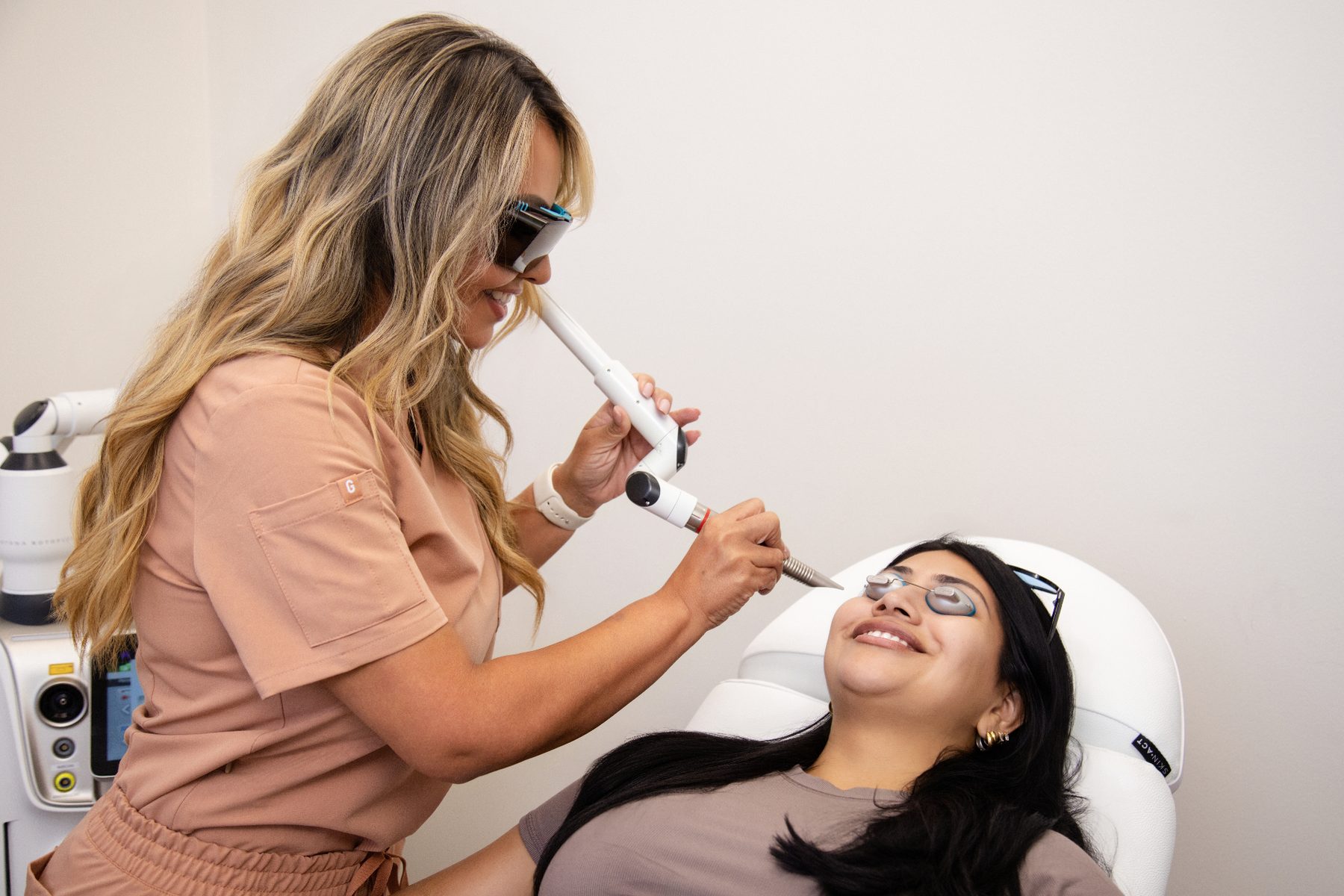

Patients rarely walk into a dermatology office asking for “a non-ablative, dual-wavelength, four-step laser rejuvenation treatment.” They ask simpler, more practical questions. Will this help my loose skin? Does it hurt? How much downtime are we talking about? Is it worth the money if I already do Botox, fillers, or microneedling? And perhaps the most honest question of all, will I still look like myself afterward?
That is usually where the conversation about the Fotona 4D Laser Facial (TimeWalker) begins.
This treatment gets attention because it sits in an interesting middle ground. It is more than a basic facial and less disruptive than aggressive resurfacing surgery-adjacent procedures. It is designed to improve skin texture, mild laxity, wrinkles, and overall skin quality through a sequence of laser steps that treat both inside the mouth and across the face. For many patients, that “inside the mouth” part is the first surprise. For others, the surprise is that the results often look subtle in the best sense of the word. Friends may notice someone looks fresher, better rested, or a little tighter, without being able to point to one obvious change.
Still, this is not a magic wand. It is a technology platform with real strengths, real limitations, and outcomes that depend heavily on skin type, age, baseline collagen quality, treatment settings, and how much change a patient expects. The questions people ask tend to circle those same issues again and again, so it is worth answering them plainly.
What exactly is the Fotona 4D Laser Facial (TimeWalker)?
At its core, the Fotona 4D Laser Facial (TimeWalker) is a laser-based skin rejuvenation treatment that uses two wavelengths, most commonly Er:YAG and Nd:YAG, in a structured sequence. The “4D” label refers to four treatment modes or dimensions that target different layers and concerns. The TimeWalker name refers to the platform and protocol branding often associated with anti-aging treatments using this system.
Patients usually do not care about the brand architecture nearly as much as what the treatment is trying to accomplish. In practical terms, the treatment is meant to stimulate collagen, improve superficial texture, address fine lines, add a mild tightening effect, and create a smoother, more refined look over time. One distinct feature is the intraoral component, in which laser energy is delivered from inside the mouth to heat tissue around the cheeks and perioral area. This can support subtle tightening without needles or incisions.
The sequence matters. Different passes are designed to target deeper tissue heating, fractional remodeling, superficial polishing, and Fotona 4D Laser Facial (TimeWalker) tightening. That layered approach is one reason this treatment appeals to people who want broad rejuvenation rather than one narrow fix.
Why do patients ask about it now?
Partly because the aesthetic market is crowded, and patients are tired of hearing every device described as revolutionary. They want something that fits real life. A person in their late thirties with early laxity may not be ready for surgery and may not want filler in every hollow or fold. A patient in their fifties may want improvement but cannot take ten days off for a more aggressive ablative procedure. Someone else may have had excellent sunscreen habits, decent skin quality, and only mild crepiness around the mouth or lower face, which makes a moderate collagen-stimulating treatment appealing.
Another reason is that many patients have become more sophisticated. They understand that “glow” treatments and “tightening” treatments are not the same thing. They ask better questions. They want to know whether a treatment is primarily for pigment, wrinkles, redness, pores, or laxity. The Fotona 4D Laser Facial (TimeWalker) comes up often because it is marketed as multitasking, and to a degree that is fair. It can address several concerns at once, though not all to the same extent.
Does it really tighten skin?
This is probably the most common question, and it deserves a careful answer. Yes, it can create a visible tightening effect, but mild to moderate is the honest description for most patients. It is not a substitute for a surgical facelift, neck lift, or blepharoplasty. It is also not the strongest option in every office for every kind of laxity. A patient with pronounced jowling, heavy lower-face descent, or significant neck skin redundancy is often hoping for more lift than this treatment Fotona 4D Laser Facial (TimeWalker) can deliver.
Where it tends to perform well is in the patient who is starting to notice softening of the jawline, mild lower-face sagging, fine wrinkling around the mouth, and a general loss of firmness. In that group, even a modest tightening response can be meaningful. The treatment often works best when expectations are calibrated to “refreshed and firmer” rather than “lifted and transformed.”
Age is only one factor. A 42-year-old with poor collagen reserves after years of tanning may respond less impressively than a 58-year-old with good baseline skin quality and diligent sun protection. Smoking history, hormonal changes, genetics, and metabolic health also matter more than many patients realize.
How is it different from a regular laser facial?
The word “facial” causes some confusion because it can make this sound spa-like. It is not a facial in the conventional sense. This is a physician-directed or medically supervised laser treatment. The distinction matters because laser energy interacts with skin and soft tissue in a way that requires judgment, setting selection, and respect for skin biology.
Compared with a lighter lunchtime laser treatment, the Fotona 4D Laser Facial (TimeWalker) aims deeper and more broadly. Compared with a single-mode resurfacing laser, it tends to spread its effort across several treatment goals. That versatility is appealing, though it also means the outcome is usually a composite improvement rather than one dramatic change in one category.
Patients often ask whether it is “better” than microneedling radiofrequency, HALO, Fraxel, or CO2. Better is the wrong word. More suitable is the right one. Someone bothered mainly by etched acne scars or severe photodamage may benefit more from another modality. Someone who wants modest tightening with texture improvement and manageable downtime may be an excellent match for this treatment.
What concerns does it help most?
The sweet spot tends to include early to moderate signs of facial aging, especially when several concerns show up together. Fine lines around the mouth, mild skin laxity, rough texture, enlarged pores, and dullness often improve in tandem. Some patients also notice that makeup sits better on the skin afterward, which is not a clinical endpoint but is often how people judge their own faces in the mirror.
It is usually less impressive for deep static folds, heavy volume loss, pronounced broken blood vessels, or dark pigment that stems from other conditions requiring a more targeted approach. The treatment may support those concerns indirectly by improving skin quality, but it is not always the main event.
A patient once described the result perfectly after her second session. She said, “I still have my age, I just don’t look as tired inside it.” That is close to the best-case outcome for many appropriate candidates.
Does it hurt?
Most patients find it tolerable, but “painless” would not be a responsible promise. Sensation varies by step. The intraoral phase can feel strange more than painful, especially for people who have never had energy-based treatment inside the mouth. External passes may feel warm, prickly, or briefly sharp depending on settings and skin sensitivity. The final polishing components are often easier than the deeper heating phases.
Topical numbing may be used, and good technique matters. So does communication during the procedure. An experienced operator adjusts based on anatomy, skin response, and patient tolerance rather than marching through a protocol as if every face were interchangeable.
Pain expectations are also influenced by what a patient has already experienced. Someone who has tolerated fractional laser or radiofrequency microneedling may consider this quite manageable. Someone whose only aesthetic treatment has been a hydrafacial may find it intense.
What does the appointment actually feel like?
Most sessions run somewhere around 45 to 90 minutes depending on whether the neck is treated, how many passes are included, and how conservative or aggressive the settings are. The skin is cleansed, eye protection is used, and the sequence begins. During the intraoral portion, a handpiece is applied inside the cheeks and around the perioral region. That part catches people off guard the first time, but many say the anticipation was worse than the reality.
After the treatment, the skin may feel hot, tight, and slightly rough. Some patients leave pink and puffy, especially around the mouth and cheeks. Others look only mildly flushed. The skin can take on a dry, sandpapery quality for a few days depending on the settings used. If a patient has chosen this treatment expecting to walk out camera-ready for a same-day event, that is usually unrealistic.
How much downtime should I expect?
Downtime is one of the most variable pieces because different practices use different protocols. On the lighter end, patients may have redness for a day or two and dryness for several days. On the more aggressive end, visible swelling, rough texture, bronzing, and social downtime can stretch closer to four to seven days. Most people are not bedridden or medically incapacitated, but they may not love how they look in bright office lighting for a short period.
A helpful way to frame it is this: the downtime is often less dramatic than traditional aggressive ablative resurfacing, but more noticeable than no-downtime “lunchtime” treatments. Patients who understand that middle ground tend to be happiest.
The aftercare basics are not glamorous, but they make a difference:
- use a gentle cleanser and bland moisturizer
- avoid active exfoliants, retinoids, and acids until cleared
- protect the skin carefully from sun exposure
- avoid heat-heavy workouts for the first day or two
- follow any antiviral or pigment-prevention plan if your dermatologist recommends one
How many sessions do most people need?
A single treatment can produce visible improvement, particularly in skin radiance and texture, but a series is often recommended for a more meaningful collagen response. In many practices, a course of three sessions spaced several weeks apart is common. That said, protocols vary. Some patients pursue one treatment before an event, knowing the result will lean more toward brightness and smoothness than true tissue remodeling. Others commit to a series and then do maintenance once or twice a year.
This is one of those moments where marketing and biology do not always align neatly. Collagen remodeling takes time. Patients often want to know what they will look like in three days, while the more durable part of the result may reveal itself over two to six months. Both time frames are real. The short-term improvement and the long-term remodeling are different layers of the same treatment.
When do results show up, and how long do they last?
There can be an early “I look better already” effect caused by mild swelling, smoother surface texture, and fresh exfoliation. Then there is the slower phase, when collagen stimulation and tissue remodeling become more noticeable. That second phase is the one dermatologists care about most, because it reflects a biologic response rather than a transient post-treatment glow.
Durability depends on age, sun exposure, smoking, skincare, and whether the patient does maintenance. A person who treats once, keeps tanning, and stops using sunscreen will not hold results like someone who protects their skin consistently. That is not a moral judgment, just tissue behavior. In real practice, many patients enjoy results for several months to a year, especially when the treatment is part of a broader plan rather than a one-off rescue.
Is it safe for darker skin tones?
This is where nuance matters. Safety depends on the specific settings, treatment components, the operator’s experience, and the patient’s skin history. Some laser modalities and treatment intensities carry a greater risk of post-inflammatory hyperpigmentation in darker skin tones. That does not automatically mean the Fotona 4D Laser Facial (TimeWalker) is off the table, but it does mean the treatment plan must be individualized rather than copied from a fair-skinned patient’s protocol.
Patients with melasma or a history of pigmentation after irritation should bring that up early. Even treatments intended to rejuvenate can provoke unwanted pigment in the wrong context. Sometimes the safest path is to modify settings, pre-treat the skin, or choose a different modality first. Skilled assessment matters more here than enthusiasm for any one device.
Can it replace Botox or filler?
Usually no, though it may reduce how much of those treatments someone wants. Each tool solves a different problem. Botox relaxes dynamic movement lines. Filler restores or reshapes volume. Laser treatments improve skin quality and can create some tightening. One does not truly replace the others.
That said, the patient who looks tired because of a mix of fine wrinkling, poor texture, and mild laxity may get far more from this laser than from simply adding more filler. This is a common mistake in cosmetic medicine. Volume is useful, but not every aging concern is a volume problem. If the skin envelope itself looks creased, thin, or deflated in quality, chasing folds with syringe after syringe can produce a puffy face with unresolved skin aging.
The best plans often combine modalities, but not all at once and not indiscriminately.
Who is the best candidate?
The best candidate is usually someone with realistic expectations, mild to moderate signs of aging, and a willingness to see improvement as a process rather than a dramatic overnight event. Good candidates often say things like, “I want to look fresher,” “my lower face feels less firm than it used to,” or “my skin looks tired even when I am not.” Poorer candidates often say, “I want my jowls gone,” “I need ten years erased,” or “I need one treatment to do everything.”
That does not mean severe aging cannot be treated, only that the treatment choice should match the problem. Dermatology is full of patients who were not disappointed because the treatment failed, but because it was asked to solve the wrong problem.
A quick screening conversation usually covers several issues at once:
- what bothers you most when you look in the mirror
- whether downtime is acceptable
- whether your concern is skin quality, laxity, pigment, vessels, or volume loss
- whether you have a history of melasma, cold sores, or post-treatment hyperpigmentation
- whether you want subtle improvement or near-surgical change
What should patients ask before booking?
This part matters more than brand names. Ask who is performing the treatment, how often they do it, what settings or approach they tend to use for your skin type, and what they think the treatment can realistically improve in your case. Ask what downtime they expect for you specifically, not for “most patients.” Ask whether they have before-and-after photos of patients with concerns and skin tone similar to yours. Ask what they would recommend instead if you were their family member and your main complaint were, say, deep nasolabial folds or a heavy neck. Honest clinics answer that question directly.
I have found that the best consultations often include at least one sentence that gently tempers expectations. If every concern receives an enthusiastic yes, the patient should be cautious. Good aesthetic medicine requires selective confidence.
What are the common misconceptions?
One common misconception is that “4D” means four times the results. It does not. It refers to a multi-step treatment design. Another is that because there is an intraoral step, the procedure must be highly invasive. It is not surgery, but it is still a legitimate medical laser treatment, not a casual beauty service.
A third misconception is that more aggressive always means better. Not necessarily. Over-treating can increase downtime and risk without meaningfully improving outcomes for a given patient. Under-treating is also common when practices market universal comfort over efficacy. There is an art to finding the therapeutic middle, and that sweet spot differs from one face to another.
The final misconception is that all visible aging can be tightened away. Some faces need volume restoration, some need pigment treatment, some need surgery, and many need a combination. The reason some patients love the Fotona 4D Laser Facial (TimeWalker) is that it improves the quality of the canvas. The reason some feel underwhelmed is that they expected it to repaint the whole portrait.
The practical bottom line
For the right patient, the Fotona 4D Laser Facial (TimeWalker) is a thoughtful, versatile rejuvenation treatment that can improve texture, fine lines, and early laxity with moderate downtime and a natural-looking result. It is not the strongest tool for advanced sagging, deep folds, or severe photodamage, but it can occupy a valuable middle ground between very light refreshers and more aggressive resurfacing or surgical options.
Patients tend to be happiest when they choose it for the right reasons. They want better skin quality, subtle tightening, and a face that looks more rested without looking obviously treated. They understand that one session may help, a series usually helps more, and maintenance protects the investment. They know that glow comes early, collagen comes later, and judgment matters more than hype.
That is ultimately why this treatment continues to generate so many questions in dermatology offices. It promises a lot, and in the right hands it can deliver meaningful improvement. The key is to match the promise to the person sitting in the chair.
OMNIA Wellness Center
Address: 16430 Ventura Blvd Ste 207, Encino, CA 91436
Phone: (818) 386-8511
FAQ About Fotona 4D Laser Facial (TimeWalker)
What are the benefits of Fotona laser treatment?
OMNIA offers this treatment for concerns such as uneven texture, dull tone, and fine lines. Results and the number of sessions vary, so discuss your goals with a provider.
Is Fotona laser safe?
A qualified provider should review your skin, medical history, medications, and recent sun exposure to determine whether the treatment is appropriate. Ask about possible irritation, pigment changes, and aftercare before booking.
How much does a Fotona 4D facelift cost?
Price depends on the treatment plan and number of visits. Ask OMNIA for an itemized estimate during your consultation.